
Understand the difference between women and men.
Female sexual arousal is generally slower than in males, but this is not always the case.
Male sexual energy flows from his penis, from his lingam. This is his power center, his positive pole, which means his ignition occurs in the pelvis.
Feminine sexual energy, on the other hand, flows from the heart. The heart is her powerhouse, her positive pole. This means that her ignition occurs in the heart.
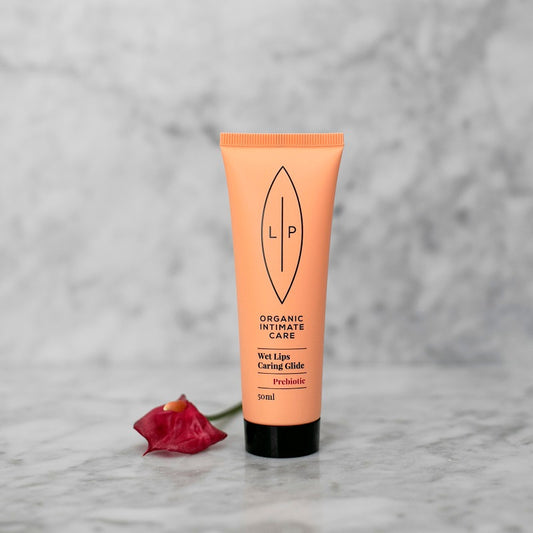
For women to feel arousal throughout their bodies and be ready for penetration, it is crucial that their hearts are open. When we are caressed slowly, when our bodies, our breasts, and our hearts are activated, the yoni will naturally open. If a man approaches the yoni too soon, or if we try to receive penetration before we are wet and ready, we close ourselves off and completely disconnect from our feminine surrender.
Over time, especially in long-term relationships, women can become increasingly reluctant to make love. Men generally want to have sex more often than women. Why does this happen? Over time, we can all become complacent. We spend less and less time on sensuality, on arousal, and on preparing to make love. It often becomes faster, more rushed, or routine, and less connected to the heart. Duty sex has almost become normal, and many women think that this is not so dangerous. That we have to perform to satisfy our man. Over time, this can lead to tension and pain in the pelvic floor, and sex can be experienced as uncomfortable and painful.
If women really listen to the clear signals their bodies are giving them, instead of rushing to please their man, their man will enjoy sex much more! It's ironic, really. This is because when we are authentically open, we surrender to full body bliss and multi-orgasmic states, which men absolutely love! This allows deep trust to develop in a relationship, which is beautiful. Unfortunately, we are all so conditioned to focus on our partner and their pleasure that we don't tune into our own bodies. This goes for both men and women. Your partner will feel your genuine pleasure. In and out of the bedroom, we are all conditioned to believe that someone else's "yes" is more important than our "no."
So, how do we stay connected to our bodies and learn to honor our “yes”? We must first be in our own bodies. This is when we become very present. After a while, presence enables us to connect more deeply with our bodies. Through presence, we also become aware of what is happening within our partner, in their body. The more connected you are to yourself, the more connected you will be with your partner.
A man usually doesn't need long to get aroused, which is why it's so essential for a man to be connected to a woman. To ask for permission verbally or energetically before entering her, and to feel if she is open, wet, and ready. A man should never penetrate a woman until she is 100% ready.
Did you know that it takes about 20 minutes to even get ready for penetration?
Women have erectile tissue, just like a man's penis does. This tissue fills with blood and swells, making the vagina wet, so that penetration feels good.
Isn't it ironic that the average sexual intercourse lasts 5-7 minutes?
Sexual response cycle
Masters and Johnson's Sexual Response Cycle, a pioneering model in sexological research, provides a framework for understanding the sequential nature of the sexual experience. For women, this cycle is often more intricate and can vary in length and intensity. Scientific findings, such as those presented in The Archives of Sexual Behavior , indicate that women may experience an extended resolution phase, during which the body gradually returns to a resting state.
Dual control model
The Dual Control Model, presented by researchers such as Janssen and Bancroft, provides insight into how the brake and accelerator systems operate in women's sexuality. This system suggests that while certain factors can increase sexual response (accelerators), others can act as brakes. These include stress, fatigue, or psychological factors. Understanding this balance is essential for creating an environment that promotes positive sexual health.
Reflections
By blending an understanding of women's sexuality with scientific findings, we can facilitate a deeper connection with our own bodies and partners. Science not only provides a framework for understanding the complexities of female sexuality, but also a platform for breaking down taboos and promoting healthy dialogue around this topic.
Let us continue to explore, learn, and celebrate the diversity of women's sexuality with curiosity and respect.